

The AI Industrial Revolution: Why Middle-Class Workers Are Under Threat This Time
Introduction: A New Era of Automation—and Anxiety
As artificial intelligence (AI) continues to drive sweeping changes across the global economy, the promise of increased productivity and innovation stands in stark contrast to growing anxieties about job security. Especially for middle-class workers, the rapid advancement of AI doesn’t just represent another technological upgrade—it signals a profound shift that places their livelihoods at risk. This article explores why the AI industrial revolution is uniquely threatening the middle class, drawing on recent financial data, industry trends, and leading research in the field.
The Growing Dominance of AI in Major Industries
The United States’ four largest tech companies have become the vanguard of the AI revolution, with their 2024 earnings reaching an astounding $268 billion. Amazon and Microsoft, in particular, surpassed analyst expectations on both revenue and profit. However, alongside these record profits came massive layoffs, disproportionately affecting middle-class employees. For example:
- Microsoft announced layoffs of roughly 6,000 employees in 2024, despite strong quarterly performance.
- Tech companies such as Meta, Google, and Amazon eliminated tens of thousands of positions in recent years.
- Between 2023 and 2024, over 260,000 tech industry workers lost their jobs, with companies citing AI-driven efficiencies as a core reason.
These losses aren’t confined to traditional blue-collar sectors. Today, AI-powered automation has penetrated white-collar domains that have historically anchored the American middle class. Increasingly, roles in law, journalism, finance, education, and design are being streamlined—or replaced altogether—by AI systems.
How AI Is Redrawing the Map for Middle-Class Employment
Historically, jobs in finance, education, law, journalism, and similar professions provided stable incomes, benefits, and upward mobility for millions. That stability is under threat, with AI automating tasks across a spectrum of white-collar careers. Consider the following shifts:
- Accounting: Platforms equipped with AI now process and audit financial data, reducing the need for traditional accounting staff.
- Journalism: Media outlets such as the Associated Press use automated article generation for financial and sports news.
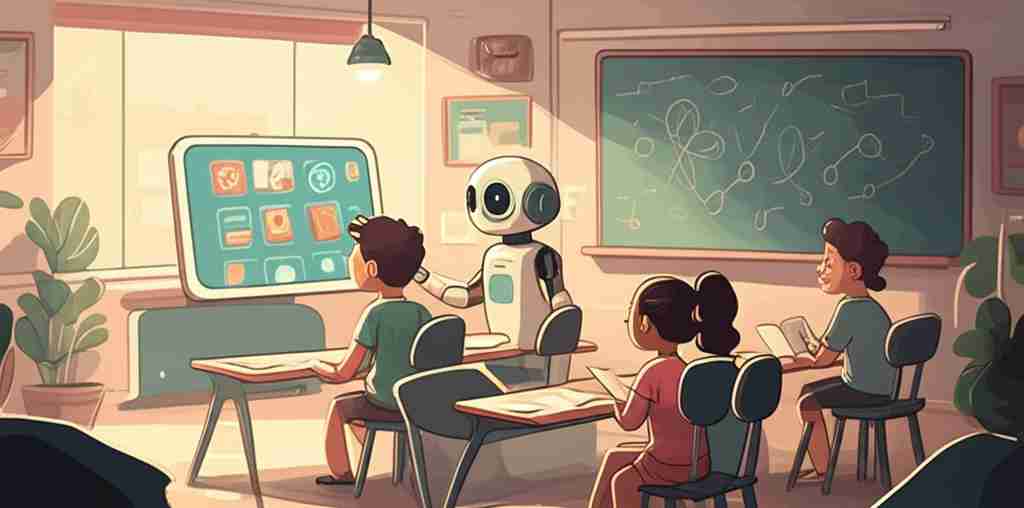
- Education: AI-powered tools and platforms like Khan Academy are performing individualized tutoring, diminishing the teacher’s traditional role.
- Programming: Tools such as GitHub Copilot can generate code, cutting demand for junior software developers.
- Law: Advanced legal tech platforms replace paralegal and assistant tasks—drafting documents and analyzing case law.
- Finance: AI-powered algorithms are taking over many responsibilities of junior financial analysts, with firms such as Morgan Stanley aggressively deploying these tools.
- Design: Generative AI allows non-specialists to create high-quality images, reducing demand for trained graphic designers.
Notably, a 2024 McKinsey report estimates that by 2030, between 15% and 30% of all working hours in white-collar occupations could be automated.
Evidence from Leading Research: The Growing Risk to the Middle Class
A study published in The Guardian found that the ongoing AI revolution poses an unprecedented threat to the middle class, not just blue-collar workers. The research highlights how jobs that once required moderate skills—known as “middlekill jobs”—are vanishing rapidly. Unlike previous industrial revolutions that primarily displaced manual labor, this wave of automation is undermining the very roles that historically supported economic mobility and social stability for the middle class. The study draws attention to the dangers of growing income and wealth inequality, warning that the erosion of middle-class employment opportunities could have far-reaching social, economic, and democratic consequences.
Income Inequality and the Shrinking Middle Class
The consequences of AI-driven job displacement extend far beyond the workplace. They are fueling a surge in wealth and income inequality that threatens the fabric of American society. Consider these key trends:
- Since 1979, U.S. labor productivity has risen by 64.6%, but average hourly compensation has grown only 17.3%.
- Capital, not labor, receives most of the economic benefits; AI enables companies to generate more value with fewer workers.
- Income and wealth inequality have reached historic levels. In 2023, the richest 10% of Americans owned 70% of all wealth.
- The middle class—those earning between 2/3 and twice the national average income—held 62% of national wealth in 1980, but only 43% by 2023.
This growing disparity is not just an economic issue. A weakened middle class can undermine democracy, limit access to education, destabilize families, and erode the sense of community that underpins healthy societies.
Actionable Takeaways: Navigating the AI-Driven Future of Work
With AI advancing at a record pace, neither workers nor policymakers can afford complacency. Here are some practical strategies to help individuals and organizations adapt:
- Continuous Learning: The days of mastering a single discipline for a lifelong career are gone. Focus on developing digital literacy, adaptability, and a mindset for lifelong learning to stay relevant in a changing job market.
- Upskilling and Reskilling: Seek out training in fields that are less susceptible to automation or learn to work alongside AI as a complement to your role—rather than in competition with it.
- Leverage Unique Human Skills: Abilities such as creativity, critical thinking, interpersonal communication, and complex problem-solving remain less vulnerable to automation and should be prioritized in your career development.
- Promote Sustainable Policies: Encourage leaders and lawmakers to support initiatives like affordable education, universal health coverage, and job transition programs that can buffer the effects of job displacement and inequality.
- Strengthen Networks: Engage with professional associations, community groups, and online forums to share resources, job leads, and best practices for adapting to automation.
While there is no one-size-fits-all solution, resilience and proactive planning can help workers weather the storm of ongoing change.
Conclusion: Shaping a Fairer Future Amid the AI Revolution
The AI industrial revolution is not a distant threat—it is already reshaping the contours of work and wealth across the United States and the world. Middle-class workers, once the backbone of economic and social stability, now face a future where established career paths and upward mobility are far from guaranteed. The challenge ahead is to harness the benefits of AI while addressing its disruptive consequences—both for workers and society at large. By combining individual adaptability with collective action and policy reform, it is possible to build a more equitable future where technological progress serves all, not just a privileged few.
About Us
At AI Automation Adelaide, we help businesses navigate the evolving world of AI by making automation accessible and practical. As AI reshapes traditional roles and workplace structures, our tailored solutions empower small and medium enterprises to adapt efficiently—supporting staff, improving productivity, and ensuring you stay ahead in a changing job market.